Department of Sociology
The Department of Sociology was established in 1998 with a commitment to promoting sociological understanding, critical thinking, and social responsibility. The Department is guided by the core values of pluralism, equality, justice, non-violence, and compassion. Our teaching-learning process encourages students to critically examine social realities and develop perspectives that are emancipatory, creative, inclusive, and socially relevant.
The Department emphasizes collaborative and cooperative learning, with a focus on the well-being of the group and society rather than individual interests alone. Students are encouraged to develop a sociological imagination—a holistic, critical, and reflexive understanding of the relationship between individuals, society, and wider social structures.
Teaching-Learning Practices
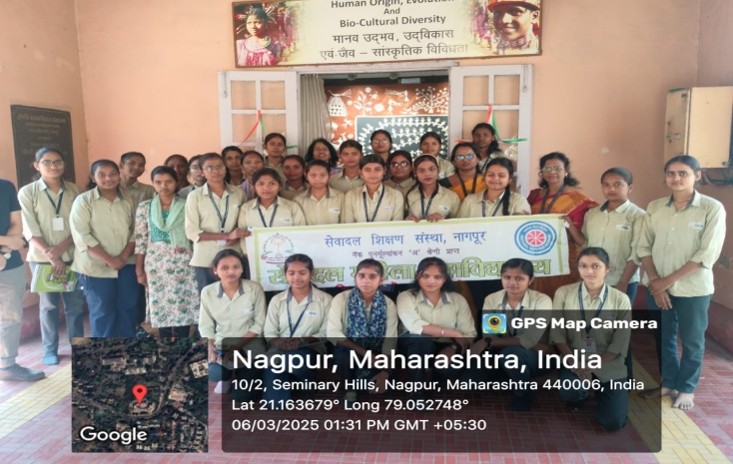
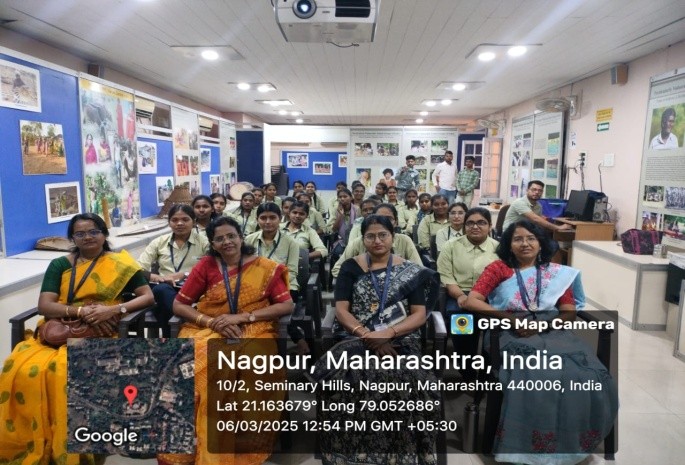
The Department promotes participatory, experiential, and reality-based learning. Classroom teaching is complemented by debates, discussions, student presentations, group activities, and field-based learning. Educational visits to industrial establishments, villages, old-age homes, de-addiction centres, and other social institutions are organized to help students connect theoretical concepts with real-life experiences. These activities make learning more meaningful and enable students to understand social issues from a sociological perspective.
Major Areas of Learning
Students are introduced to a wide range of contemporary social issues, including caste, religion, intolerance, development, environment, gender equality, media and democracy, peace, disability, tribal communities, and issues concerning children. The Department encourages students to critically engage with these issues and apply their sociological understanding to promote awareness and positive social change in the wider community.
Extension and Social Engagement
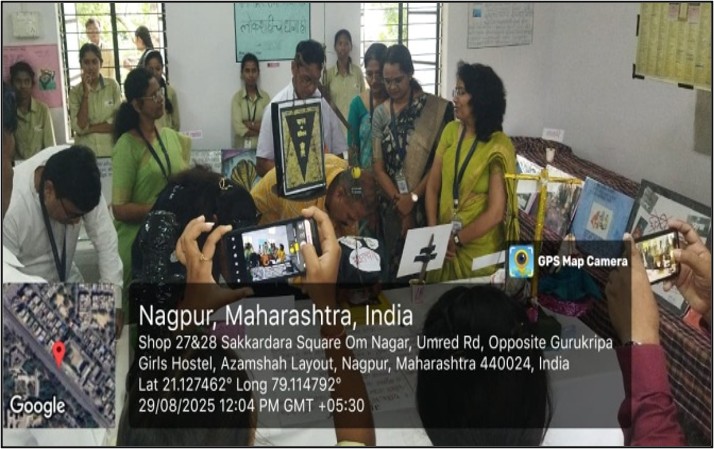
The Department actively engages with society through academic and extension activities. Important national and international days such as World Population Day, World Literacy Day, Human Rights Day, International Day of Non-Violence, and other significant occasions are observed through lectures, discussions, awareness programmes, poster presentations, campaigns, and other activities. Through its academic, experiential, and community-oriented initiatives, the Department strives to develop socially sensitive, critically aware, responsible, and compassionate citizens who can contribute meaningfully to society.
| Faculty/ Course |
Semester | Subject | Distribution of Marks | ||
|---|---|---|---|---|---|
| Theory | Activity | Internal | |||
|
B.A. I year |
Sem. I | M1- Sociology : An Introduction of Sociological Concepts | 60 | NA | 40 |
| Sem. II | M2- Introduction of Sociological Processes | 60 | NA | 40 | |
|
B.A. II year |
Sem. III | M3- Foundation of Sociological Thought | 80 | 20 | |
| Sem. III | M4- Social Problems in Contemporary India-I | 40 | 10 | ||
| Sem. III | Minor- Foundation of Sociological Thought (for students other than Sociology) | 80 | 20 | ||
| Sem. III | VSC- Digital Tools in Social Research | 50 | |||
| Sem. III | FP- Field Project | 100 | 50 | ||
| Sem. IV | M5- Indian Sociological Tradition | 80 | 20 | ||
| Sem. IV | M6- Social Problems in Contemporary India-II | 40 | 10 | ||
| Sem. IV | Minor- Indian Sociological Tradition (for students other than Sociology) | 80 | 20 | ||
| Sem. IV | CEP- Community Engagement Programme | 50 | 50 | ||
|
B.A. III year |
Sem. V | M7- Sociology of Education | 80 | 20 | |
| Sem. V | M8- Indian Society: The Structural Issues | 80 | 20 | ||
| Sem. V |
Elective- (Any one)- a) Family, Kinship and Marriage b) Introduction of Gender Studies c) Sociology of Social Movement d) Introduction of Cultural Studies |
80 | 20 | ||
| Sem. V | Minor- Indian Society: The Structural Issues (for students other than Sociology) | 80 | 20 | ||
| Sem. V | VSC- Introduction of SPSS | 40 | 10 | ||
| Sem. V | FP/CEP- | 40 | 10 | ||
| Sem. VI | M9- Education and Society in India | 80 | 20 | ||
| Sem. VI | M8- Cultural Issues in Indian Society | 80 | 20 | ||
| Sem. VI |
Elective- (Any one)- a) Rural and Urban Transformation b) Gender and Society c) Social Movement in India d) Media and Society |
80 | 20 | ||
| Sem. VI | Minor- Cultural Issues in Indian Society (for students other than Sociology) | 80 | 20 | ||
| Sem. VI | OJT | 100 | |||
Web link of University Syllabus:
| Sr. No |
Name | Year of Awarded |
University | Title Of Ph.d Research Work |
|---|---|---|---|---|
| 01 | Dr. Kavita Mate |
08/08/2017 Faculty Humanities |
Rashtrasant Tukadoji Maharaj Nagpur University Nagpur | “Gramin Vikas Dursanchan Krushitantrachi, Bhumika. Maharashtratil Nagpur Jilhaya Vishesh Sandarbhatil Samajikty Adhyayan: |
| 02. | Dr. Ujwala Mokadam |
Dec 2021 Faculty Humanities |
Rashtrasant Tukadoji Maharaj Nagpur University Nagpur | “Vitabatti, Kamgaranchya Samsya: Ek Samajshastriya Adhyayan” |
Guest Lectures :
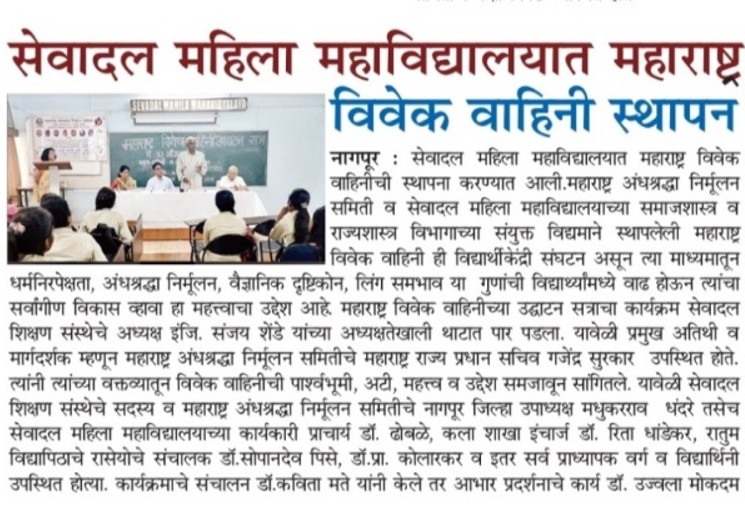
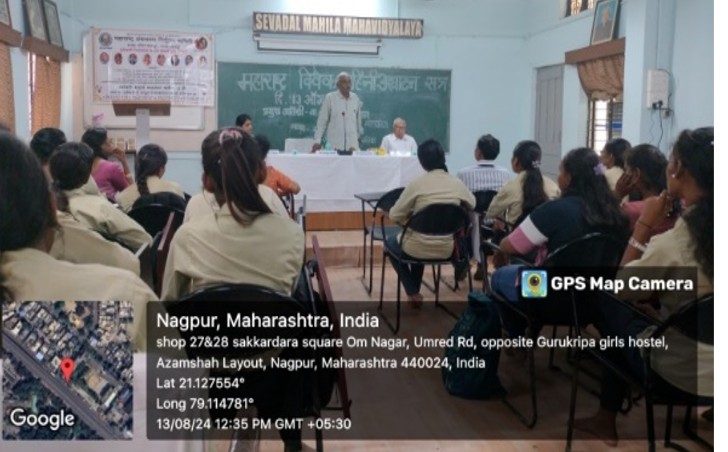
The VivekVahini Unit of Maharashtra VivekVahini was established at Sevadal Mahila College on Tuesday, 13th August 2024.
Maharashtra VivekVahini is a student-centric initiative established in association with the Maharashtra Andhashraddha Nirmoolan Samiti (ANIS). The unit at Sevadal Mahila College is promoted through the collaborative efforts of the Department of Sociology and Department of Political Science.
The initiative aims to encourage scientific temper, rational thinking, critical inquiry and a questioning attitude among students. It provides a platform for students to engage in discussions, awareness activities and programmes that promote constitutional values, equality, social justice, scientific outlook and freedom from superstition.
Through various academic and social activities, the VivekVahini Unit seeks to develop responsible, rational and socially conscious students who can contribute positively to society.
“We, too, deserve to live with dignity” — Mohini’s(Transgender) call for equality
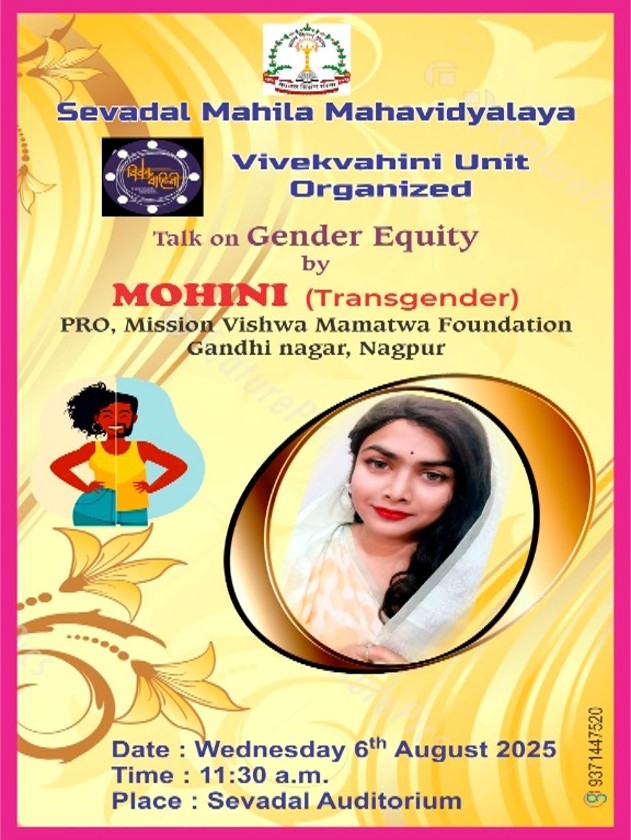
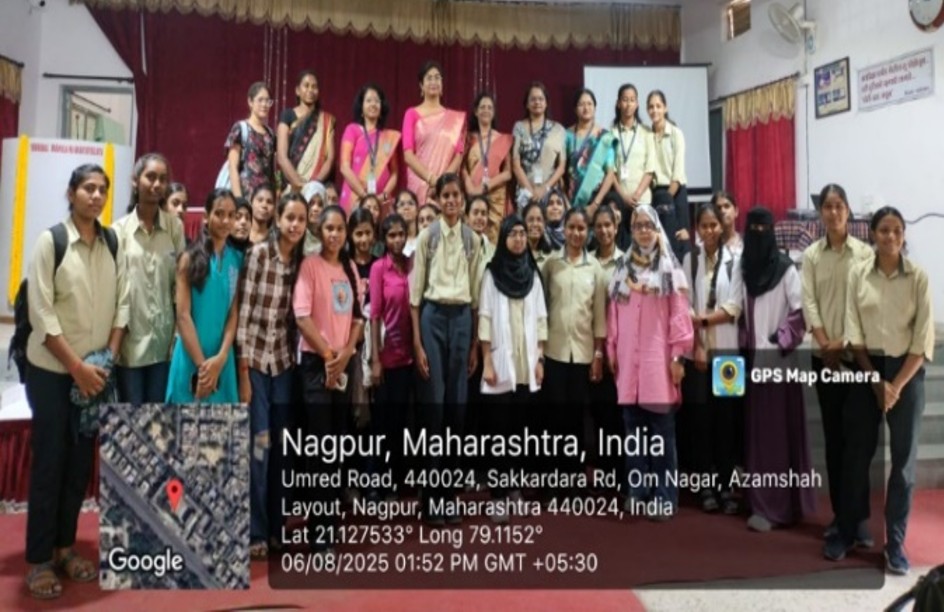
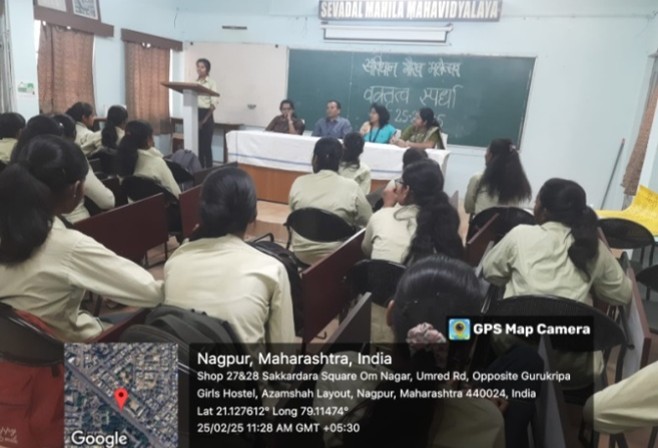
Speaking at a gender-equality awareness programme jointly organised by the Vivekvahini Unit, Department of Political Science, and Department of Sociology, Sevadal Mahila Mahavidyalaya, on Wednesday, August 6, 2025, Mohini, a transgender representative and Public Relations Officer of Mission Vishwa Mamatva Foundation, expressed the community’s aspiration for dignity, equality, and social acceptance. Emphasising the importance of equal rights and opportunities for transgender persons, she poignantly stated, “We, too, should be able to live with self-respect.”
| Sr. No. | Name of Faculty Member | Qualification | Designation | Work Experience (in years) | Research Areas |
|---|---|---|---|---|---|
| 1 | Dr. Kavita Mate | Bsc. B.Ed. M.A(soc),SET, NET, Ph.D | Assistant Professor CHB | 05 Years | Rural Sociology |
| 2 | Dr. Ujwala Mokadam | M.A.(soc) B.Ed,SET,Ph.D | Assistant Professor CHB | 05 Years | Urban Sociology |
| Sr. No |
Name | Year of Publishing |
ISBN No | Title Of Book |
|---|---|---|---|---|
| 01. |
Dr. Kavita Mate |
Sept 2018 |
ISBN:978-81- 937717-0-9 |
Gramin Vikasat Dursanchar Madhyamanchi Bhumika |
|
Sept 2018 |
ISBN:978-81- 937717-30 |
Indian Society: The Structural Issues | ||
|
August 2019 |
ISBN:978-81- 941770-3-6 |
Social Problems In India | ||
|
April 2023 |
ISBN-978-93- 5674-060-09 |
Lingyanprat V Madhyame SAVITRIBAI PHULE PUNE UNIVERSITY School of Open Learning (Distance Education Program) B.A. (Sociology) Second Year SEC 2-K |
||
| 02 |
Dr. Ujjwala Mokadam |
Dec 2025 |
ISBN – 978-93- 65060-12-6 |
Vibhatti Kamaranch Samaj Vastav |
RESEARCH Published by Dr. Kavita Mate in Marathi Vishwakosh on ECO FEMINISM on 17/12/2020
| Sr No |
Name of the Faculty | Scopus Journal |
UGC Listed Journal |
Peer Reviewed Journal |
Chapter in book |
|---|---|---|---|---|---|
| 1. | Dr. Kavita Mate | 0 | 05 | 15 | 02 |
| 2. | Dr. Ujjwala Mokadam | 0 | 04 | 05 | 01 |
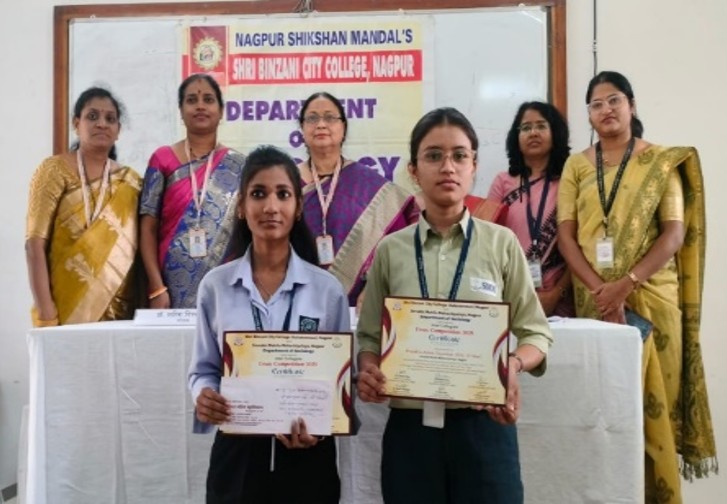
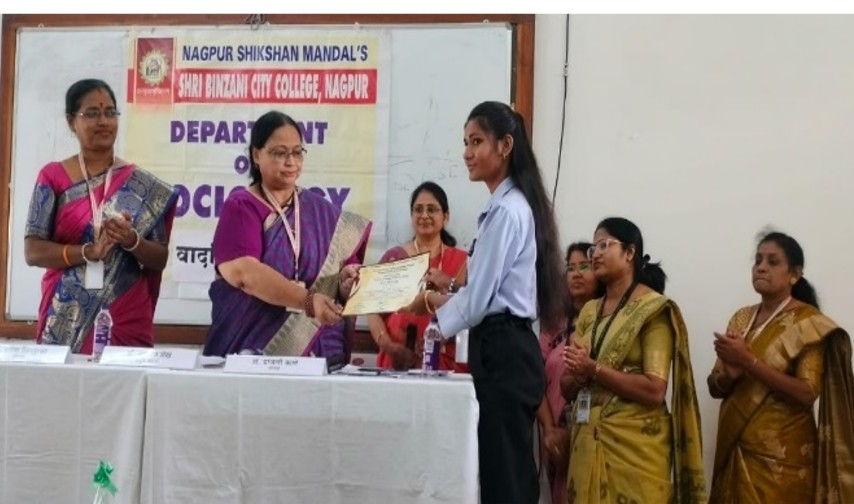
College students excelled in the inter-collegiate essay competition on ‘Effect of Social Media on Young Generation’s Social Behaviour and Mental Health’ held at SB City College, Nagpur on dated 20.02.2026.
Visit to Coco-Cola and Dinshaw Factory, MIDC, Hingna, Nagpur
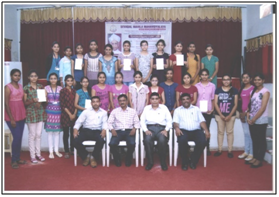
Hon’ble Principal along with the students and Committee Members who resolved to donate their eyes post-death